

Lymphedema hits hard and quietly. One day, your arm or leg feels heavy, the next, it keeps growing. Clothes stop fitting, everything aches, and the scale jumps even though you haven’t eaten more.
That’s lymphedema swelling and the fake lymphedema weight gain that comes with it. It’s not fat, but fluid; your body can no longer move. Knowing why this happens and what helps is the first step to getting your body back.
Struggling with swelling, fatigue, or post-surgery recovery?
Book your personalized lymphatic drainage session today and experience natural, therapeutic healing that restores balance and promotes long-term wellness.
Book an AppointmentWhat is Lymphedema and How It Develops
Lymphedema occurs when the lymphatic system becomes damaged or clogged, preventing it from draining fluid properly.
The role of the lymphatic system
Think of the lymphatic system as the body’s sewer system. It collects extra fluid and waste from your tissues, runs it through lymph nodes to purify it, and then returns it to your blood. When the pipes or filters are broken or removed, everything backs up.
Primary vs. secondary lymphedema
Primary lymphedema means you were born with unsteady lymph vessels, which is very rare. It causes swelling in the feet and arms due to genetics. Secondary lymphedema is more common and shows up after cancer surgery, radiation, harmful infections, or severe injuries that damage the system.
Why does lymph build-up lead to progressive symptoms
Initially, the swelling might come and go. Leave it unattended, and the stuck fluid starts scarring the tissue, bringing constant lymphedema pain, hardness, and repeated infections that make everything worse.
How Lymphedema Causes Swelling
Fluid accumulation in soft tissues
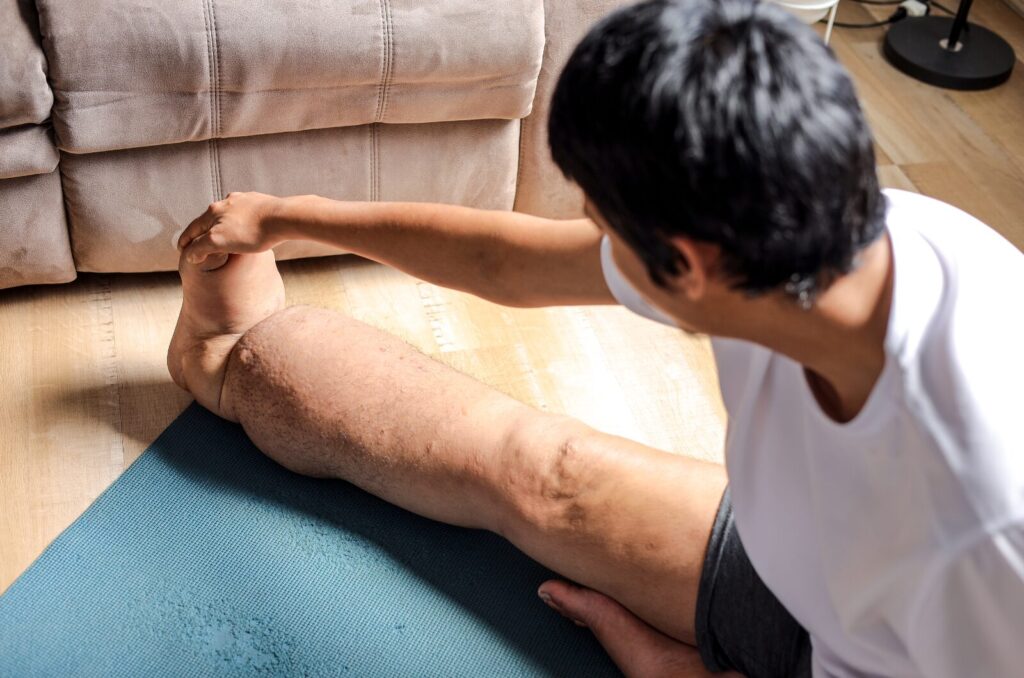
When lymph channels are blocked or gone, thick fluid leaks out and settles in your arms, legs, or hips. That protein-rich lymph pulls in even more water, and eventually, you develop considerable, tight lymphedema swelling.
Early-stage vs. advanced-stage swelling signs
Early on, press your finger in, and it leaves a dent that fills in slowly; raise the limb, and it improves. Later stages turn rock-hard, with no dent; the skin gets thick and rough, and no amount of elevation helps much.
Why does swelling worsen without treatment?
The longer the fluid sits there, the more it inflames and scars the surrounding tissue. The skin thickens, limbs continue to grow, and what started as puffy can end up uncontrollably huge.
Common areas affected (arms, legs, breast, and abdomen)
Lymphedema patients typically experience fluid accumulation in the arms, particularly on the surgical side in patients who have undergone surgery. Pelvic cancer hits the legs. You can also see fat deposits in the breasts, chest wall, abdomen, genitals, face, and neck.
Understanding Lymphedema Pain
How excess fluid triggers pressure and discomfort
The extra fluid squishes nerves and stretches skin that wasn’t meant to stretch. You end up with a deep, heavy ache or burning lymphedema pain that never really stops.
Pain from inflammation, fibrosis, and tight skin
Over time, the body forms scar tissue as it attempts to repair the damage. Skin turns shiny and tight. After some time, it stiffens, and now you’ve got sharp, stabbing lymphedema pain on top of the swelling.
Why does movement become painful in advanced stages?
Thick, scarred tissue acts like stiff leather around your joints. Walking, reaching, or rolling over in bed pulls on sore spots, making everything hurt more.
Managing and reducing lymphedema pain effectively
Hands-on drainage, solid compression, gentle movement, and simple pain meds drop the pressure fast. Most people notice a significant difference in their days when they stick with these treatment methods.
Lymphedema and Weight Changes: Why It Feels Like Weight Gain
Difference between actual weight gain vs. fluid retention
Real weight gain is often caused by unhealthy fat accumulation resulting from poor lifestyle and eating habits. On the other hand, fluid retention is the accumulation of water, where one arm or leg can pack on 10, 20, or even 50 pounds of fluid, causing the scale to fluctuate significantly overnight.
How lymph build-up increases limb size and body mass
A swollen leg can add inches and pounds you can see and feel. Rings won’t go on, shoes don’t fit, and your whole balance feels off.
Emotional impact of lymphedema weight changes
Watching your body change like that messes with you psychologically. Many people hide their arms or legs, skip pool parties, and feel embarrassed about the lymphedema weight gain that isn’t their fault.
How treatment can reduce perceived weight gain
Treating lymphatic build-up requires getting the fluid moving with compression therapy; the limb can shrink rapidly, sometimes by inches in a week. Clothes fit again, and you finally feel like yourself.
What Triggers Lymphedema Swelling, Pain, and Weight Changes
Cancer treatments (radiation, lymph node removal)
Taking out or zapping lymph nodes during cancer surgery is the number-one reason people end up with sudden lymphedema swelling months or years later.
Infection, inflammation, and injury
A severe skin infection (cellulitis), an infected cut, or a bug bite can clog the lymphatic system, causing the limb to swell rapidly.
Hormonal changes and lifestyle factors
Heat, salt, prolonged standing, long flights, menstrual periods, and pregnancy can cause your body to retain fluid, which can overwhelm a weak lymphatic system and lead to lymphedema and weight gain.
Why symptoms may flare suddenly
Your lymphatics are already maxed out. One little trigger and fluid pours in faster than it can drain; swelling and pain hit hard and fast.
Effective Ways to Manage Lymphedema Symptoms
Manual lymphatic drainage (MLD)
A trained therapist uses gentle, light strokes to direct the fluid in the right direction. Most people notice their arm or leg getting smaller on the same day.
Compression garments and bandaging
Special sleeves, stockings, or short-stretch bandages squeeze just enough to keep fluid from coming back and help shrink the limb over weeks.
Exercise, stretching, and safe movement
Simple movement exercises, such as pumping moves, swimming, walking, or yoga, with a therapist’s approval, keep the lymph flowing without exacerbating the condition.
Skin care to prevent infections that worsen symptoms
Keep skin soft, clean, and protected. A single scratch that gets infected can send you to the hospital and cause overnight weight gain from lymphedema.
Conclusion
Lymphedema doesn’t have to run your life. Yes, the swelling, pain, and extra weight can feel awful, but they often improve with the right help. At Lymphatic Therapy Services in San Diego, we offer complementary care for managing lymphedema. We also offer manual lymphatic drainage, compression therapy, gentle movement, and daily skin care.
These treatments help shrink limbs, alleviate pain, and restore your body to a normal state. Please don’t wait for it to get huge and complex. Book your appointment today to get your diagnosis, start a treatment plan, and take control before lymphedema swelling takes over.
FAQs
Can Lymphedema Swelling Go Away On Its Own?
No. Once the lymphatic network is damaged, lymphedema swelling stays, unless you treat it. Catch it early with compression and therapy, and you can shrink it way down; doing nothing almost always means it gets bigger and more complicated.
Why Does Lymphedema Pain Get Worse At Night?
During the day, gravity pulls some fluid down. At night, you’re flat, so it all pools where it hurts most. Pressure climbs, nerves scream, and lymphedema pain wakes you up. Sleep with the limb raised high or wear night compression, and you’ll feel the difference.